Trump's Venezuela deal is an endless pit of corruption

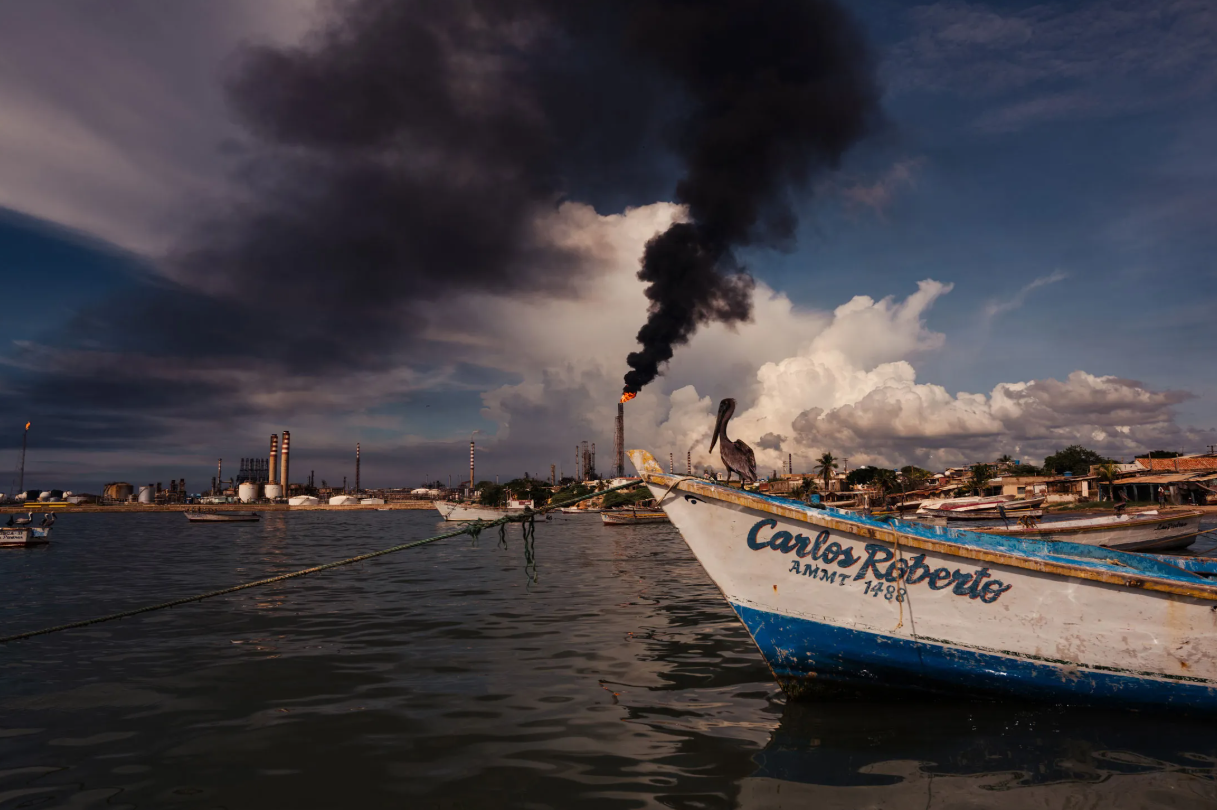
Where is the Venezuelan oil money going?
Earlier this month, Journalist Spencer Ackerman, author of “Reign of Terror,” wrote a piece suggesting that the U.S. government may be using Venezuelan oil sales to create a “self-funding” mechanism for the Pentagon, operating outside of Congress’s control — a grave violation of the legislative branch’s power of the purse and yet another threat to our constitutional order, if true.
Here’s how the arrangement could work: Recall that Trump kidnapped Venezuelan leader Nicolas Maduro, installed Secretary of State Marco Rubio as “viceroy,” and announced what the White House called the “biggest oil deal in world history.” That deal, between the U.S. government and interim president Delcy Rodríguez, gives the Pentagon’s Office of Strategic Capital a 35% equity stake in North American Blue Energy Partners (NABEP), which holds 100-year concessions for 17 oil fields. The Pentagon structured the stake using “penny warrants,” allowing the U.S. to buy equity for a nominal amount (like one cent).
From the White House press release:
In connection with this agreement, the Venezuelan interim authorities have granted North American Blue Energy Partners (NABEP), a privately held oil company that is the second-largest private Venezuelan oil producer and a proven operator, 100-year concessions for 17 oil fields with proven reserves of approximately 65 billion barrels.
At no cost to the American taxpayer, NABEP has granted the U.S. Department of War’s Office of Strategic Capital a 35% equity stake in its corporate parent, representing up to hundreds of billions in value and dividends for the United States.
But the equity stake is only part of the story. The more immediate potential revenue stream comes from the administration’s right to buy 20% of the oil “from all current and future fields NABEP will operate” at production cost, as well as the right of first refusal to purchase the remainder. That arrangement could allow the U.S. government to buy oil below market prices and resell it at a profit.
More from the White House:
NABEP has granted the U.S. Department of State the right to purchase, at production cost, a guaranteed 20% of the off-take from all current and future fields NABEP will operate—ensuring a stable supply of low-cost oil that can facilitate refilling the Strategic Petroleum Reserve (SPR), which Joe Biden depleted to historic lows, and to provide supply for military and other sensitive uses.
NABEP has also granted the U.S. Department of State the right of first refusal to purchase the remaining 80% of its production, providing a guaranteed source of energy in our hemisphere in emergency situations.
The crucial unanswered question is what happens if the government resells that oil at a profit and who controls the resulting revenue. Our constitutional structure was designed to separate the power to tax and spend (Legislative branch) from the power to execute laws or command the military (Executive branch) in order to prevent authoritarian or king-like rule. An executive branch that collects public revenue without statutory authorization, or spends public funds without a valid congressional appropriation, would contravene fundamental principles of the U.S. constitutional structure.
And the administration’s handling of Venezuelan oil revenue to date offers little reason for confidence. Readers may remember that, in the months after Maduro’s imprisonment, Secretary of State Rubio admitted that $500 million of oil money was routed to an account in Qatar. Both the Trump and Rodríguez regimes claim those funds, as well as all revenue collected since (an estimated $13 billion), have been disbursed to the Venezuelan government. But the administration has yet to provide a public accounting of the Qatar account or the new Citibank account where revenue is purportedly being stashed.
Despite promising in April to produce quarterly audit reports, the Trump administration hasn't sent anything to Democrats on the House Foreign Affairs Committee, the Financial Times reported on July 22. Democrats on the House Oversight Committee wrote another letter on Wednesday demanding information. Even hawkish Republicans who supported the operation have started to get uneasy about the lack of transparency on the money.
"We have never seen those [audit] reports…It's been six months. I would like to see two reports, because it's every three months," Rep. María Elvira Salazar (R–Fla.) said during a July hearing. In response, Assistant Secretary of State Caleb Orr promised to give Congress "appropriate summaries" that would "protect relevant information that's part of our foreign policy." In other words, the fate of that money is a state secret.
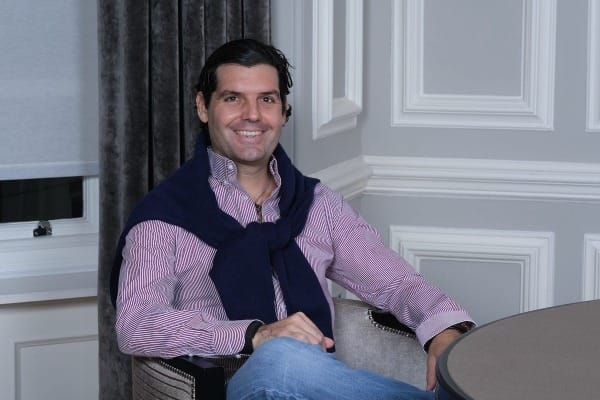
Now, the Pentagon stands to reap the profits of a 35% stake in an oil company run by a suspected money launderer with no apparent transparency measures in place. NABEP is controlled by Venezuelan businessman Alejandro Betancourt, who was the subject of money laundering and tax fraud investigations in the U.S., Spain, and Switzerland…until the Trump administration intervened.
In the 2010s, Betancourt bought into Petrozamora, an oil company co-owned by the Venezuelan state and Russian investors. Under Betancourt, the company became one of the most successful extraction operations in Venezuela. In 2016, U.S. investigators began probing a loan arrangement made in bolivars, the Venezuelan currency, to the state oil company, PDVSA, that was paid back in foreign currency at an artificially high official exchange rate.
The investigation, called Operation Money Flight, led to money laundering charges in South Florida against Betancourt’s cousin Francisco Convit and others, including Venezuelan officials who allegedly were paid bribes to facilitate the scheme, which prosecutors said grew to $1.2 billion. Several defendants pleaded guilty.
In 2019, the Miami Herald identified Betancourt as an unnamed conspirator in the criminal complaint against Convit [...] That same year, Zurich prosecutors opened a money laundering investigation, targeting proceeds from loans that were allegedly funneled into Swiss bank accounts. [...] In 2024, another Venezuelan businessman, Raul Gorrin, was charged by the United States with involvement in the alleged loan scheme…People with knowledge of the case confirmed that Betancourt was again included as an unnamed conspirator.
Betancourt himself was arrested twice in Britain last year — once in response to a warrant in Spain and again at Switzerland’s request — and barred from leaving the United Kingdom as authorities considered extraditing him to Switzerland. Then the U.S. captured Venezuelan leader Maduro and found itself needing allies inside the country.
Senior U.S. officials…lobbied to resolve the case in Switzerland in a way that would avoid criminal charges and end travel restrictions against the Britain-based businessman, Alejandro Betancourt, and they have not acted on a Swiss arrest warrant against him, according to the two people, who spoke on the condition of anonymity to discuss a sensitive matter. Instead, the United States has allowed Betancourt to enter the country repeatedly for meetings with the Trump administration, other people familiar with his travel said. [...]
In May, Switzerland withdrew its extradition request in Britain, and British travel restrictions were lifted. Swiss prosecutors said that same month their investigation remained active and sought to have him detained elsewhere. At almost the same time, they extended an international arrest warrant for Betancourt, and Swiss authorities sent a request to the Justice Department to arrest him in the United States, people with knowledge of the matter said. The department has taken no action on that request.
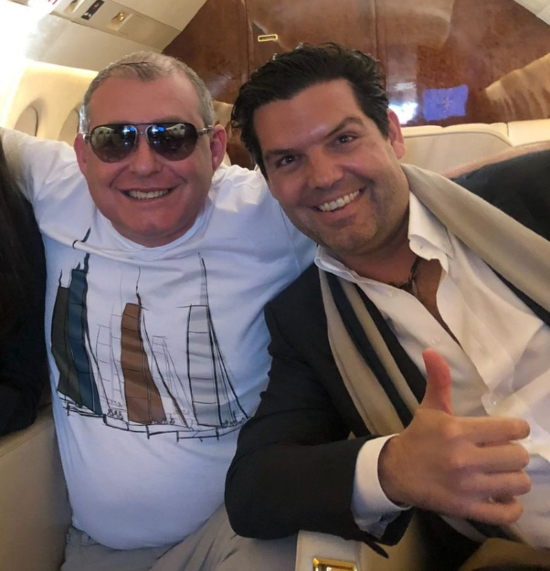
One person familiar with the deliberations told ProPublica that people close to the Trump administration appeared keen to work with Betancourt's company because of “the privacy and flexibility it offered.” That gave NABEP a potential advantage over publicly traded oil companies.
“For example,” the person said, “Chevron couldn’t give 35% of their shares to the Pentagon.”
In other words, the Trump administration appears to have chosen NABEP not just for the potential windfall from Venezuelan oil, but also for the secrecy and lack of oversight its private ownership affords.
If the Pentagon can acquire a lucrative equity stake in a private company, if the State Department can purchase oil at cost and potentially resell it at a profit, and if the resulting proceeds can be managed without meaningful public accounting or clear congressional authorization, the arrangement risks creating an executive branch with an independent financial stake in a foreign resource and a potential revenue stream beyond Congress's effective control.
Political favors, private fortunes, and presidential pardons
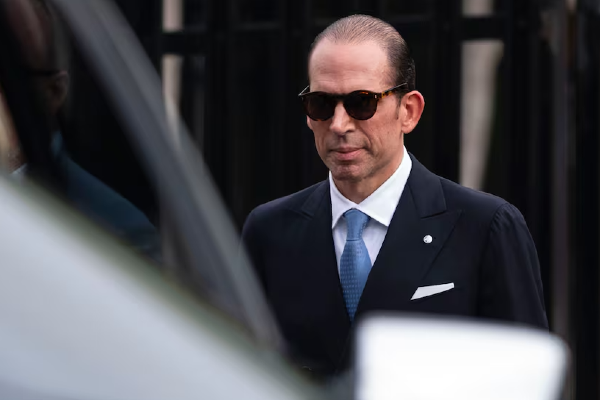
Julio Herrera Velutini, a billionaire banker whose family is among Venezuela’s largest landowners, was charged in 2022 for his alleged involvement in a bribery scheme. According to the indictment, Herrera Velutini illegally financed the election campaign of former governor of Puerto Rico Wanda Vázquez in exchange for the removal of a regulator investigating his bank.
According to the indictment, beginning in 2019, Herrera Velutini’s bank was the subject of an examination by Puerto Rico’s Office of the Commissioner of Financial Institutions (OCIF), a regulatory agency that oversees financial institutions operating in Puerto Rico. Through intermediaries, Herrera Velutini and Rossini allegedly promised to provide funding to support Vazquez Garced’s 2020 gubernatorial election campaign in exchange for Vazquez Garced terminating the Commissioner of OCIF and appointing a new Commissioner of Herrera Velutini’s choosing. The indictment alleges that Vazquez Garced accepted the offer of a bribe and, in February 2020, took official action to demand the resignation of OCIF Commissioner A and, in May 2020, to appoint OCIF Commissioner B – a former consultant for the international bank owned by Herrera Velutini – who had been personally selected by Herrera Velutini. In return, Herrera Velutini and Rossini allegedly paid more than $300,000 to political consultants in support of Vazquez Garced’s campaign.
In December 2024, Herrera Velutini’s U.S. citizen daughter, Isabela Herrera, donated $2.5 million to Donald Trump’s super PAC, MAGA Inc. In July 2025, she contributed another $1 million, bringing her total donations to $3.5 million.
A month later, in August 2025, prosecutors dropped the charges of conspiracy, federal program bribery, and honest services wire fraud against Herrera Velutini. He instead pled guilty to a single misdemeanor violation of United States campaign finance law.
The Campaign Legal Center subsequently filed a complaint with the Federal Election Commission alleging that Isabela Herrera was serving as a “straw donor” for her father.
Circumstantial evidence raises serious question as to whether Isabela Herrera used her own money to contribute $3.5 million to Trump’s super PAC, which appears to have been the price for her father’s freedom. Specifically, the timing and circumstances surrounding the contributions, and the fact that Herrera appears to lack the financial means or any demonstrated interest in electoral politics to suddenly contribute millions of dollars to a super PAC, provide reason to believe that Herrera was not the true contributor, and that the money instead was provided by her billionaire father, whose freedom appeared to hinge on the contributions—but who, as a foreign national, could not legally make the contributions himself
But that’s not all. In September 2025, a month after the DOJ entered a favorable plea agreement with her father, Isabela Herrera committed to donating $2.5 million to fund Trump’s ballroom. According to the Washington Post, she paid a first installment of $835,000 on Oct. 14, 2025.
Around the same time, the Herrera family hired Alina Habba, Trump’s former personal lawyer and at various times in 2025 a “counselor to the president,” de facto acting U.S. Attorney for the District of New Jersey, and senior advisor to the Attorney General. The Herrera's reportedly offered Habba $10 million a year for four years, as well as millions of dollars in bonuses, to join a newly established Herrera business called Concord Partners.
Under the agreement, Ms. Habba would become general counsel at Concord Partners, a company that Ms. Herrera set up in late October 2025 in Florida. The company has no public profile and its business remains unclear even to some people associated with the Herrera business empire. Ms. Habba finalized her deal days after the company was registered, while she was still serving as U.S. attorney in New Jersey.
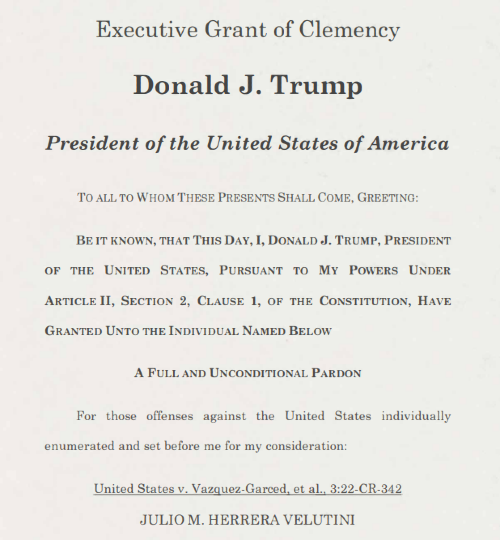
Habba officially began working for Concord on January 1, 2026. Two weeks later, Trump granted a full and unconditional pardon to Herrera Velutini and the other people charged in the bribery scheme.
And yet, that still isn’t the end of the brazen corruption. In September 2026, Habba married Turkish billionaire Turhan Mildon, head of Miller Holding, his family’s construction and infrastructure conglomerate. Mildon also happens to operate cement plants in Venezuela, where his business interests came under threat following the U.S. capture of Maduro and the installation of Delcy Rodríguez as Venezuela's interim leader.
Before the United States captured Mr. Maduro, aides to Mr. Trump and some U.S. intelligence officials expressed concern about Mr. Mildon’s work with the Maduro government, according to multiple people briefed on the matter. Mr. Mildon had spent months trying to build ties between Alex Saab, one of Mr. Maduro’s closest confidants in Venezuela, and Republicans in Mr. Trump’s orbit. The Trump administration had considered placing sanctions on Mr. Mildon, two people involved in the discussions at the time said.
Once Mr. Maduro was out of the picture, things for Mr. Mildon got even worse. Venezuela’s interim leader, Delcy Rodríguez, ordered an audit of the state-owned cement plants that Mr. Mildon was operating. In June, she issued an order revoking his contract altogether, citing a failure to meet investment targets, according to a copy of the document seen by The New York Times. [...] The new government accused him of failing to raise output and lower prices. Contractors complained of unpaid invoices.
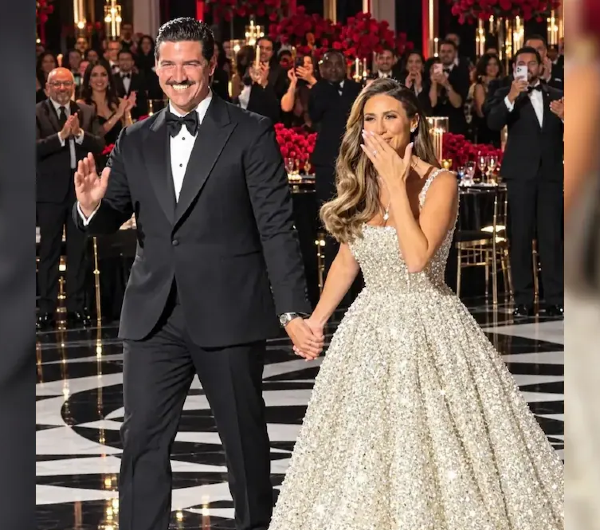
Facing the loss of his Venezuelan business, Mildon began cultivating relationships with influential Republicans at events organized by Trump's allies, including at the Trump-run Kennedy Center where he eventually met Habba:
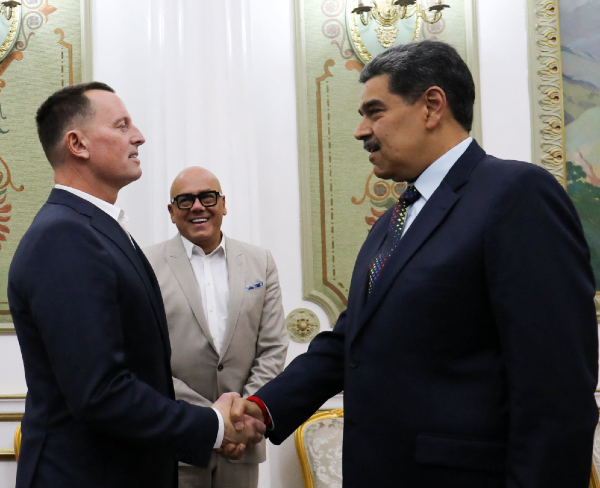
He became a frequent guest at the John F. Kennedy Center for the Performing Arts, where he networked with the man in charge of the institution at the time, Richard Grenell. Mr. Grenell was also working as Mr. Trump’s special envoy to Venezuela, and trying to broker Mr. Maduro’s exit from power.
Mr. Grenell introduced Mr. Mildon to some of the MAGA crowd. Mr. Mildon’s spokesman said his client and Ms. Habba had first met at an event at the Kennedy Center in late 2025, and started dating in early 2026.
After Mildon’s relationship with Habba became public knowledge, the interim Venezuelan government paused all sanctions against him and his companies:
By this past summer, the couple’s burgeoning romance had begun to draw attention. Specifically, it caught the eye of Ms. Rodríguez, according to two people close to her. Mr. Mildon was in a serious relationship with a woman who had high-level access to Mr. Trump — the one person keeping Ms. Rodríguez in power.
Since taking office, Ms. Rodríguez has been trying to balance the interests of the competing MAGA factions, and gauging their relative influence over Mr. Trump. After learning of Mr. Mildon’s powerful allies, she decided to pause her order terminating his cement contracts, allowing him to continue to profit from them, according to people familiar with her thinking.
Mildon may have secured his interests in Venezuela for the time being, but he is now embroiled in a new controversy involving a purported $17.6 million “business transaction” with Richard Grenell. According to the New York Times, Habba and Mildon say they transferred the money to TX-AT, a Texas-based defense and security equipment company, at Grenell's direction. Mildon reportedly believed that $5.6 million of the total would be set aside for the Kennedy Center. Grenell, however, denies involvement in the transaction or any role in soliciting the payments.
Mr. Grenell said no financial transaction took place between him and Mr. Mildon or entities related to him. “I’ve never asked for one cent to be sent somewhere else pretending it was for the Kennedy Center, and I’ve never received any payment from him,” Mr. Grenell said.
Mr. Grenell said he consulted for TX-AT in 2024 but had no connection to the company at the time that Mr. Mildon says he made the transfer. Mr. Grenell said he had never solicited payments on the firm’s behalf. Representatives at TX-AT did not respond to multiple requests for comment.
Author’s note: Apologies for the lack of posts lately. I took a few weeks off to take a breath and reset. Should be back on schedule now. Thank you all for your patience and understanding